
2025 NKCF Keratoconus Doctor of the Year: Dr. Steven Greenstein MD

Director’s Desk: August 2025
August 6, 2025
Save the Date!
August 6, 2025
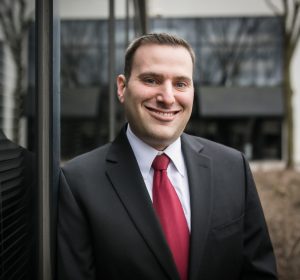
Spotlight on Dr. Steven Greenstein, MD
Each year, the National Keratoconus Foundation (NKCF) recognizes two outstanding clinicians—one ophthalmologist and one optometrist—who go above and beyond in their dedication to the keratoconus (KC) community. This year’s ophthalmology recipient of the 2025 NKCF Keratoconus Doctor of the Year Award is Dr. Steven Greenstein, a leading cornea and refractive surgeon, Medical Director and Director of Refractive Surgery at the Cornea and Laser Eye Institute (CLEI) and its Center for Keratoconus in New Jersey. He is also a co-inventor, with Drs. John Gelles and Peter Hersh, of Corneal Tissue Addition Keratoplasty (CTAK), a surgical technique to treat keratoconus. NKCF is proud to honor Dr. Greenstein for his decades of contributions to crosslinking research, corneal reshaping, and patient education.
In this special interview, Dr. Greenstein reflects on the evolution of care, the unique needs of KC patients, and his vision for the future of keratoconus management. (Stay tuned for our next newsletter, where we’ll share insights from the optometry recipient of the 2025 Keratoconus Doctor of the Year Award.)
- What originally drew you to working with keratoconus patients — and what has kept you invested over time?
Back in medical school I was searching for a research opportunity and joined the CLEI Center of Keratoconus just as corneal collagen crosslinking was entering clinical trials. Being “on the cutting edge” of the first major innovation for keratoconus in decades ignited my lifelong passion for this work. I credit my mentor, Dr. Peter S. Hersh, for creating a unique center where routine eye care, surgery, and specialty contact lens services coexist, and my mother, Dr. Karen Schneider, whose dedication to ophthalmology first inspired me to pursue this field. Seeing how that comprehensive model addressed gaps in care and watching crosslinking evolve from an experimental procedure into standard of care has inspired me to remain at the forefront of innovation in keratoconus management.
- Can you describe a moment when you realized the standard of care wasn’t enough — and what you did differently?
Very early in my career, I realized how fragmented keratoconus management was. Patients bounced between a general eye doctor for routine care, a different clinic for specialty contact lenses, and a surgeon for procedures. Communication gaps were common. Today, together with Dr. John Gelles, I’m honored to lead the CLEI Center for Keratoconus—the first dedicated subspecialty center for keratoconus in the nation—where we offer all of these services under one roof. Coordinating cross-linking, corneal reshaping, and vision correction in one setting allows us to personalize care and expose patients to the full range of options, rather than just one.
- In your practice today, what’s your approach when you first meet a newly diagnosed KC patient?
The first and most important thing I do is listen to where the patient is in this process. I ask about the challenges they’ve already faced and what brought them to my office, then I ask about their goals — many want the best possible vision, but others prioritize functional glasses or minimizing contactlens wear. Understanding those goals allows me to match treatment options to the individual. Most people diagnosed with keratoconus are young; for many it’s their first chronic disease. That’s why I spend extra time reassuring them that the condition is manageable and that multiple treatment stages may be required.
- What role do education and communication play in your relationships with KC patients and families?
Time and open conversation are central to our practice. First visits often include parents or other family members because young adults rarely come alone. I welcome questions from both patients and families and prefer to address disagreements in the room rather than leave anyone confused. I view the National Keratoconus Foundation (NKCF) as a vital partner in education and encourage patients to engage with its community resources. In an age of social media, moderated forums with highquality information help patients realize they are not alone and connect them to success stories.
- How do you help patients navigate the uncertainty and emotional toll that often comes with progressive vision loss?
Many newly diagnosed patients ask me whether they will go blind. I reassure them that with proper treatment, keratoconus has effective management options. I also explain that the disease is incurable and requires lifelong monitoring and sometimes multiple interventions. To mitigate anxiety, I spend time discussing each step of care. A key goal of my approach is to provide patients with some functional vision even when they are not wearing specialty lenses. For example, I treated a patient who underwent topographyguided PRK and subsequent cataract surgery and later escaped a house fire without scleral lenses. He later told me that being able to see without lenses “saved his life”. That story reminded me that improving unaided vision to a “functional” level can reduce the constant fear many keratoconus patients live with.
- What are the biggest gaps in keratoconus care today — and where do you think the field needs to go next?
I believe many patients still lack access to the full spectrum of treatment. Our care model is a comprehensive approach to treatment which we call KC 1, 2, 3: first achieve stability (typically with collagen crosslinking), then consider reshaping the cornea, (with procedures like topographyguided PRK or CTAK) and finally correct vision with glasses, contact lenses, or possibly refractive surgery. Not everyone needs every step, but patients should be aware of all options. Too often people are offered a single contact lens and told nothing else exists. On the surgical side, crosslinking has become standard for stabilization, yet inlays and corneal laser procedures that reduce reliance on lenses remain under-utilized. I also believe we need to do a better job with early detection and screening. Ideally, keratoconus would be diagnosed before vision deteriorates so that crosslinking could prevent progression, and no other treatment would be needed for correction. I advocate involving pediatricians in screening programs.
- What is one piece of advice you wish every new KC patient — or their parent or caregiver — could hear?
My core message is that keratoconus is manageable. It isn’t cured with a single procedure, but there are multiple proven therapies, and new options are emerging. I encourage patients and parents to seek care at centers that offer comprehensive evaluation and to ask about stability, reshaping and vision correction rather than assuming only one treatment exists. I also urge families to connect with the NKCF community to learn from others and to remember that managing keratoconus is a journey best taken with support.
- When you reflect on the nominations that led to this award, what do you think your patients or colleagues see in you that’s different?
Mentorship, collaboration and patientcentered communication are what I believe set me and our practice apart. Comprehensive care is a team effort and patients spend as much time with staff as with their doctor.
- Tell us about a time when a KC patient changed your perspective — or reminded you why this work matters.
The story of the housefire survivor left a lasting impression on me. After undergoing corneal reshaping and cataract surgery, the patient could function without scleral lenses. Months later his home burned down. He and his wife escaped safely, and he later told me that being able to see without lenses during an emergency “saved his life”. The incident underscored the psychological burden many keratoconus patients carry — the fear that if a lens breaks or is lost they will be helpless. It also reinforced for me why offering visionimproving procedures beyond basic stability is so important.
- What do you hope your impact on the keratoconus community will be — now and in the years ahead?
Looking ahead, I hope to broaden screening so that keratoconus is detected before vision loss occurs. I envision collaborating with pediatricians to incorporate corneal topography into adolescent checkups. I also want to continue advancing corneal reshaping techniques and educating colleagues so more practices adopt the KC 123 framework. Finally, I hope to strengthen the patient community through the NKCF so that everyone living with keratoconus has a trusted source for information and support. By combining early detection, comprehensive treatment and patient education, I believe the future will be brighter for people affected by this disease.

